Sign and Blade are custom order items and are sold separately. Price is available by quote only. Request a quote for pricing. Â
Standard: usually ships in 2-3 business days. Custom: usually ships in 5-7 business days.
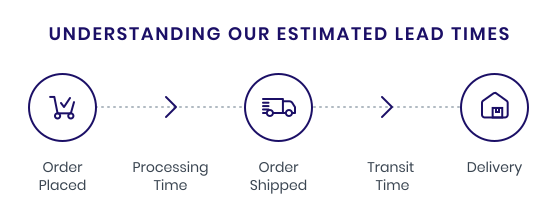
Learn more about our Estimated Lead Times
NATIONWIDE DELAY
TIMING & EXPECTATIONS ARE EVERYTHING
UPDATE: January 11,2023
Florence Corporation is experiencing delays of up to 2 weeks for Cluster Mailbox orders due to overwhelming demand.
This affects all online mailbox distributors & retailers.
Regarding a Product's Shipping Estimate
The lead times listed on this product page represent the best-case scenario for shipping estimates. While we may show that a product "usually ships" within a given period, this period should not be confused with a delivery estimate. Rather, we expect the product to ship from the manufacturer's warehouse within this timeframe.
What does this mean for you? Once you place an order on our site, we begin processing the order with the manufacturer. The processing lead time we list on the product page is the most current estimate from the manufacturer regarding the product.
Note
If you purchase a commercial mailbox from us and decide to cancel because a competitor lists a "faster" lead time on their site, you may be delaying the time it will take to receive your mailboxes.
Why? Because you are placing a new order with the same manufacturer for processing.
Below, we answer our customers' top three FAQs regarding delivery estimates.
How long will it take to receive my commercial mailbox?
When you order a commercial or cluster mailbox, we process the order with the manufacturer within one business day. Once processed, the order usually ships in the time frame listed on the
product page. Since Cluster Mailboxes are large items, they ship via freight carriers. As such, these transit times will usually take 5 to 7 business days.
A few things to note about purchasing a cluster mailbox or similar large, commercial-grade product:
The freight carrier will call the number you list on the shipping address a day before delivery to schedule a delivery appointment with you.
The manufacturer ships using their chosen freight carrier depending on the products ordered and the delivery location.
Most (if not all) online retailers who sell commercial mailboxes (CBUs, etc.) ship directly from the manufacturers, just as we do.
If you choose professional mailbox installation with your commercial mailbox purchase, please note that same-day installation is unavailable. We will help you schedule the installation after the
delivery of your mailbox. In most cases, our installers complete the installation within one week following delivery.
What if I order multiple products from different brands?
If you order multiple products, you may be purchasing products from different manufacturers. If this is the case, your products will ship to you separately from each manufacturer.
For example, if you purchase a set of wedge anchor bolts with a cluster mailbox, your CBU will ship from Florence or Salsbury's warehouse in about 5-7 business days. Still,
your anchor bolts will ship separately from another warehouse in about 1 to 3 business days.
How can I estimate my shipment's transit time?
Depending on the carrier and your location, transit times will vary. You can estimate delivery times using your carrier tracking number. Once your order ships, we'll send you a shipping confirmation email that includes your carrier (FedEx, UPS, YRC, etc.) and tracking number.
Note
If you place an order with us and do not receive an Order Confirmation email, check your spam inbox. If you still do not see an Order Confirmation email in your inbox, contact us immediately at
(866) 707-0008 . We will provide you with your Order Number and any other details you need.
Regarding a Product's Shipping Estimate
Mayne ZERO Program Return Procedure
Thank you for choosing Mayne Products at BudgetMailboxes.com! We are certainly sorry that your purchase did not work out as you had hoped. In order to make the return process as quick and seamless as possible and your credit issued promptly, please follow the steps below when completing your return.
1. Contact us within 30 days of receiving your item(s) to obtain a Return Authorization Number (RA#).
2. We will respond with an RA# and links to printable pre-paid return labels. Simply print these labels, affix them to the items for return and take them to your closest UPS drop-off location.
3. All products must be returned in their original packaging (poly bag and box) and must be unused and in re-sellable condition. Please place the product in the poly bag first and then back into the cardboard box and seal well with packing tape. When returning Mayne Window Boxes, please ensure that the steel wall mount brackets are placed in a separate plastic bag to avoid possible damage to the product.
Customers who return used or damaged product or poorly packaged items may be denied credit or may be subject to additional processing fees.
Available Sizes: 18-inch, 24-inch, and 30-inch diameter options
Reflectivity: Type I (Engineering Grade), Type III (High Intensity), and Type IV (Diamond Grade) available
Substrate: Heavy-gauge aluminum sign blank, rust-free and corrosion-resistant
Backplate: Coordinated aluminum backplate available to enhance sign visibility and reinforce the decorative profile
Post: Extruded aluminum pole meeting ASTM standards, available in multiple heights
Finish: Premium powder-coated enamel baked on for UV and moisture resistance
Base Options: Decorative flange base or in-ground direct burial
Finial: Ornamental cap options included for a finished, intentional appearance
Reflectivity Comparison: Which Grade Do You Need?
Reflectivity grade determines how visible your sign is to drivers at night and in low-light conditions. Choose based on your specific traffic environment.
Grade
Type
Best For
Recommended Use
Engineering Grade
Type I
Low-speed, low-traffic zones
Parking lots, private driveways
High Intensity
Type III
Moderate traffic, residential roads
Residential streets, HOA communities
Diamond Grade
Type IV
High-speed or high-risk locations
Hazardous intersections, arterial roads
The Imperial Estate Series ships standard with a High Intensity (Type III) street sign face.
How to Build Your Sign System
Configuring the Imperial Estate system takes five decisions. Work through them in order and you'll have a compatible, complete setup before checkout.
Choose component color. Black is the standard HOA and campus choice. It holds up against UV fading better than lighter powder coats and coordinates cleanly with most architectural palettes.
Choose your traffic sign and blade combo. Pair your STOP face with a street name blade. The style of the blade frame influences the overall look of the sign and how the name panel is attached. Flat blades suit minimalist installs; framed blades add structure.
Select pole height. Measure from finished grade to the bottom of the sign face. MUTCD recommends a minimum 7-foot clearance at pedestrian locations and 14 feet at vehicle crossings. Subtract the depth going into the ground from the total pole length to find the height above ground.
Pick frame size and blade frame style. Frame size determines how many street name blades you can mount. Blade frame style, open or closed, changes the visual weight of the assembly. Open frames read lighter; closed frames look more formal.
Choose finial and base. The finial caps the top of the pole and signals a planned installation rather than a utility setup. The base choice affects durability: a decorative flange base works well on poured concrete pads, while direct burial suits softer ground installs.
Compliance Notes: DOT and MUTCD
The Imperial Estate Series sign face meets MUTCD (Manual on Uniform Traffic Control Devices) design standards for stop sign geometry, color, and lettering. The aluminum substrate and reflective sheeting conform to federal specifications for traffic control devices on roadways open to public travel.
Installing on a public road requires local approval regardless of sign quality. Contact your municipality or transportation department before installation. The rules may be less strict for HOAs and campuses, but using MUTCD guidelines is still the safest and most responsible choice.
Typical approved use cases include municipalities, HOA entrance roads, private community streets, campus intersections, commercial parking lot entrances, and gated developments.
Installation Overview
Here's what a standard Imperial Estate pole installation involves:
Tools and materials: The basic tools include a post hole digger or auger, quick set concrete, a level, a tape measure, and the included mounting hardware.
Dig: Dig to a depth appropriate for your soil type and pole height. A general rule is to bury one-third of the total pole length.
Set post: Place the pole in the hole and plumb it with a level on two perpendicular faces.
Pour and cure: Pour quick-set concrete around the base. Allow full cure time before proceeding. Rushing this step compromises long-term plumb.
Mount sign: Attach the sign face and blade assembly using the provided hardware. Confirm all fasteners are tight before leaving the site.
On sloped ground, measure your above-grade pole height from the high side of the grade. Follow local codes for setback distance from the road edge and use appropriate safety precautions during all ground work.
Why Choose the Imperial Estate Sign?
The Estate Series isn't assembled from mismatched components. Imperial designs the sign face, post, base, and finial as a matched system: same finish batch, same tolerances, same design language. The decorative base and ornamental finial give HOAs and community developments a finished, intentional look at the curb rather than the utilitarian appearance of a standard utility install. You don't spend time hunting compatible hardware or second-guessing whether the post gauge matches the mounting bracket.
The extruded aluminum pole meets ASTM structural standards, which matters for wind load performance in exposed locations. The powder-coated enamel finish is electrostatically applied and oven-cured. It bonds to the metal rather than sitting on top of it. Property managers and HOAs like this system because it keeps the community looking sharp and well cared for over time.
Frequently Asked Questions
What reflectivity do I need for night visibility?
It depends on your traffic environment. Here's a quick guide:
Parking lots and low-speed private drives: Type I Engineering Grade is sufficient
Residential streets and HOA roads: Type III High Intensity is the right baseline
Hazardous or high-speed intersections: Type IV Diamond Grade delivers the highest nighttime visibility
Is this approved for public road use?
The sign face meets MUTCD design standards. Installation on a public road still requires approval from your local transportation authority or municipality. For private roads, HOAs, campuses, and parking areas, no public-road approval is needed, but using MUTCD-compliant signs is recommended for driver recognition and liability protection.
Does the package include custom street name text?
Street name blades come included with the system setup. Custom text is specified at the time of order. Confirm your street name, lettering size, and reflectivity grade when building your sign combo in step two of the configuration process.
What STOP sign size should I choose for a street vs. a private road?
Sign size should match your road type and speed environment. Here's how to decide:
18-inch: Suited for low-speed parking areas and pedestrian-priority zones
24-inch: Standard for residential streets and HOA roads, the most common choice
30-inch: Required on higher-speed roads and recommended wherever MUTCD compliance with arterial standards is needed
Additional Info
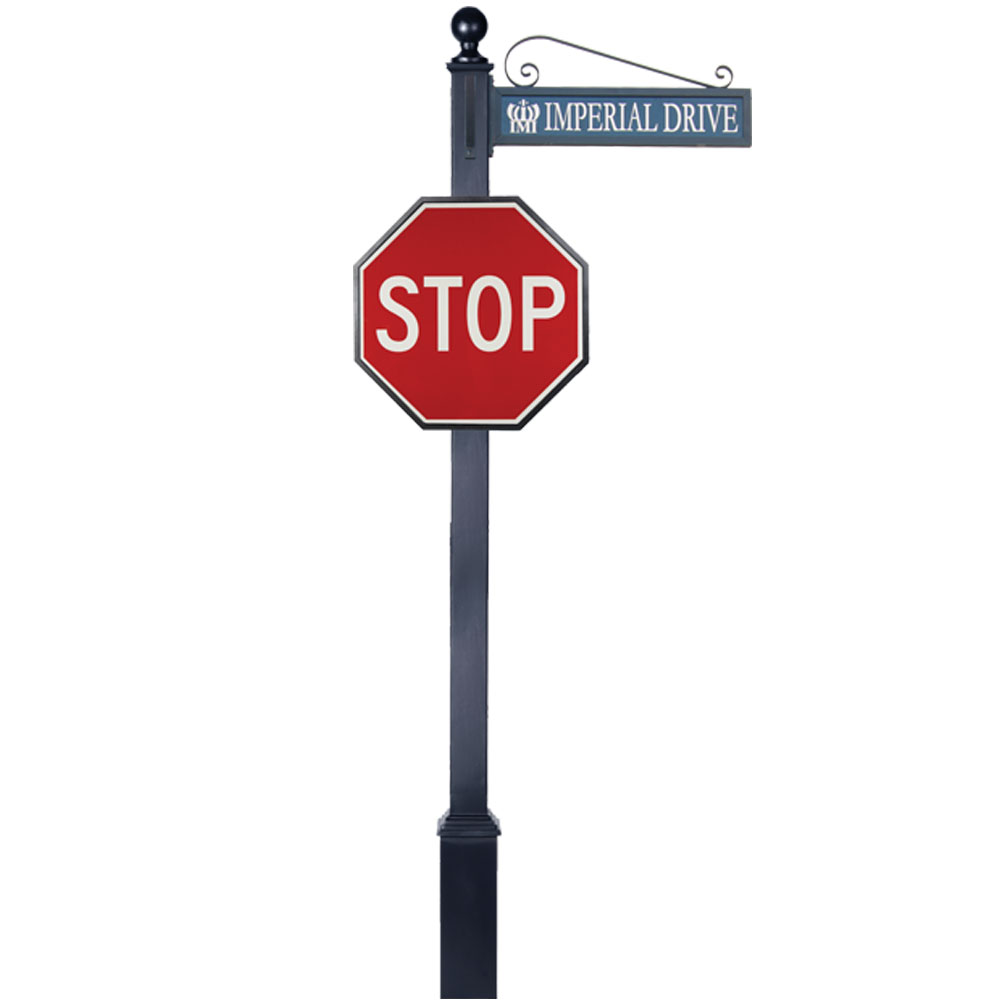
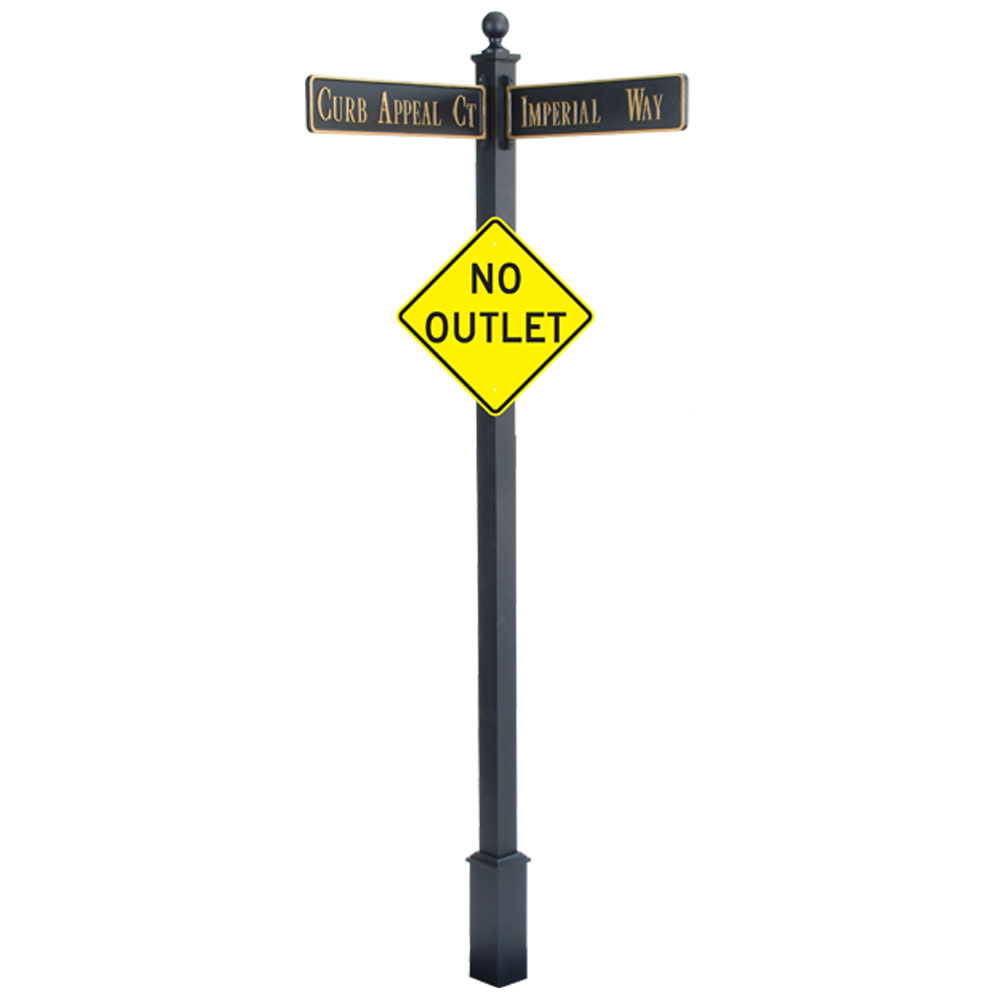
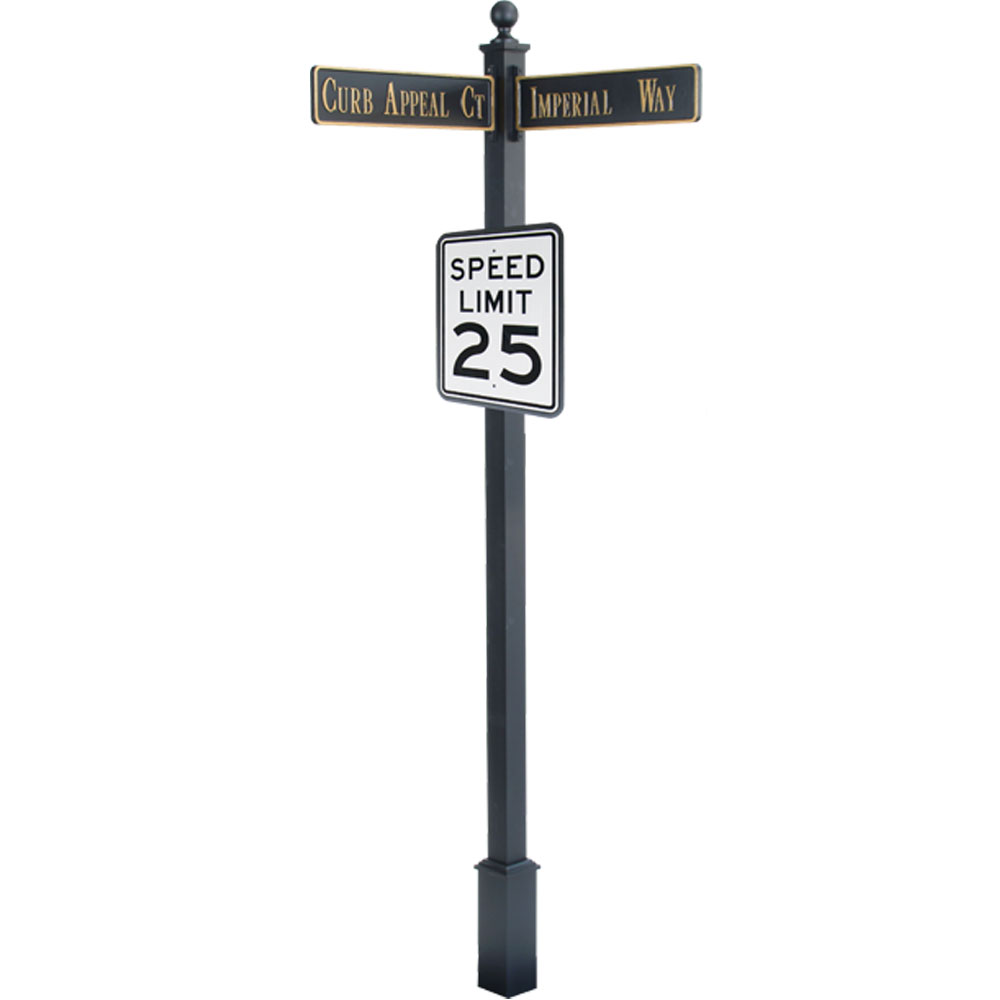
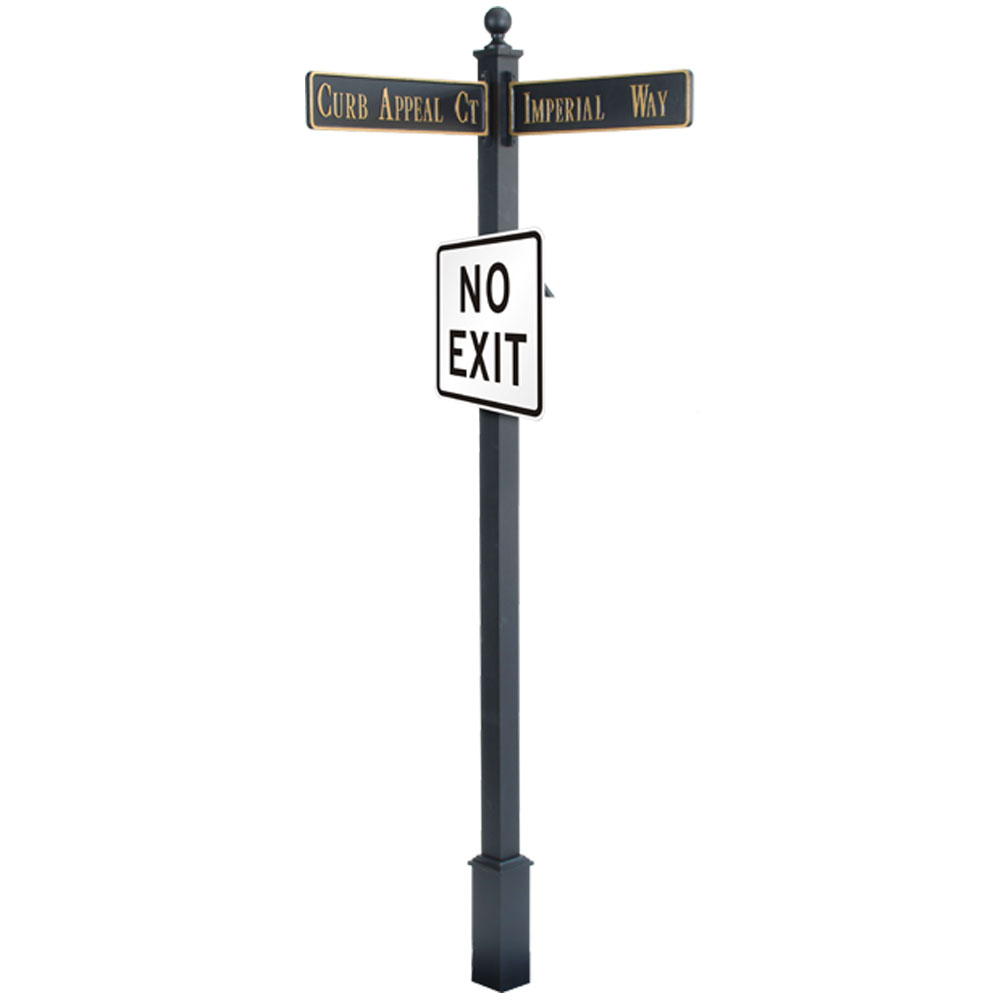
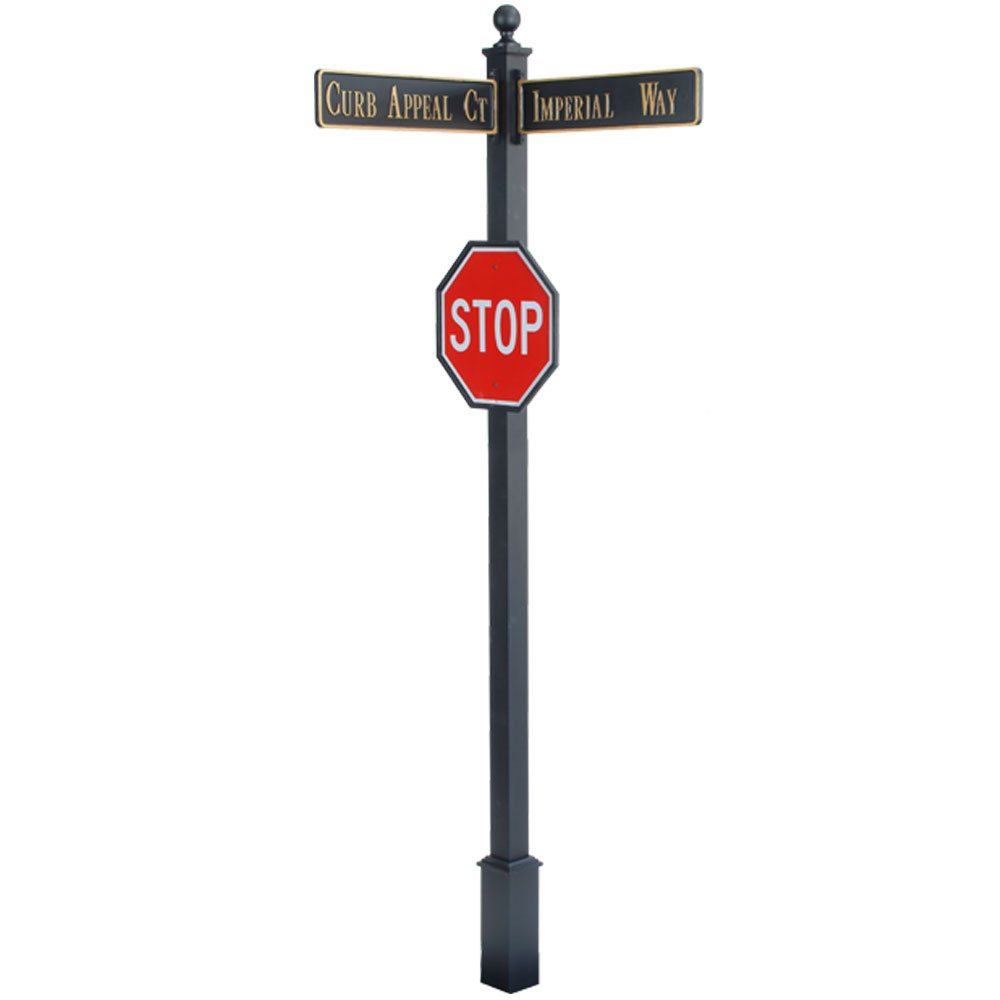
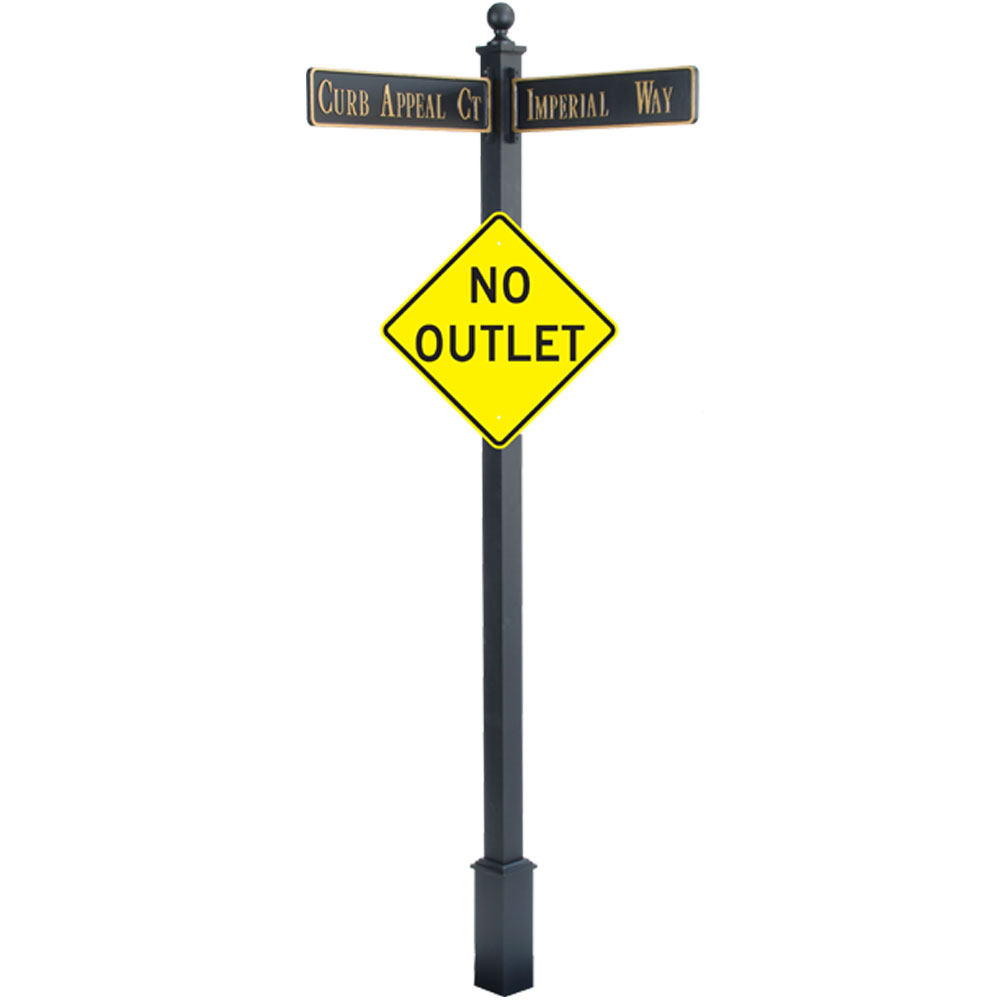
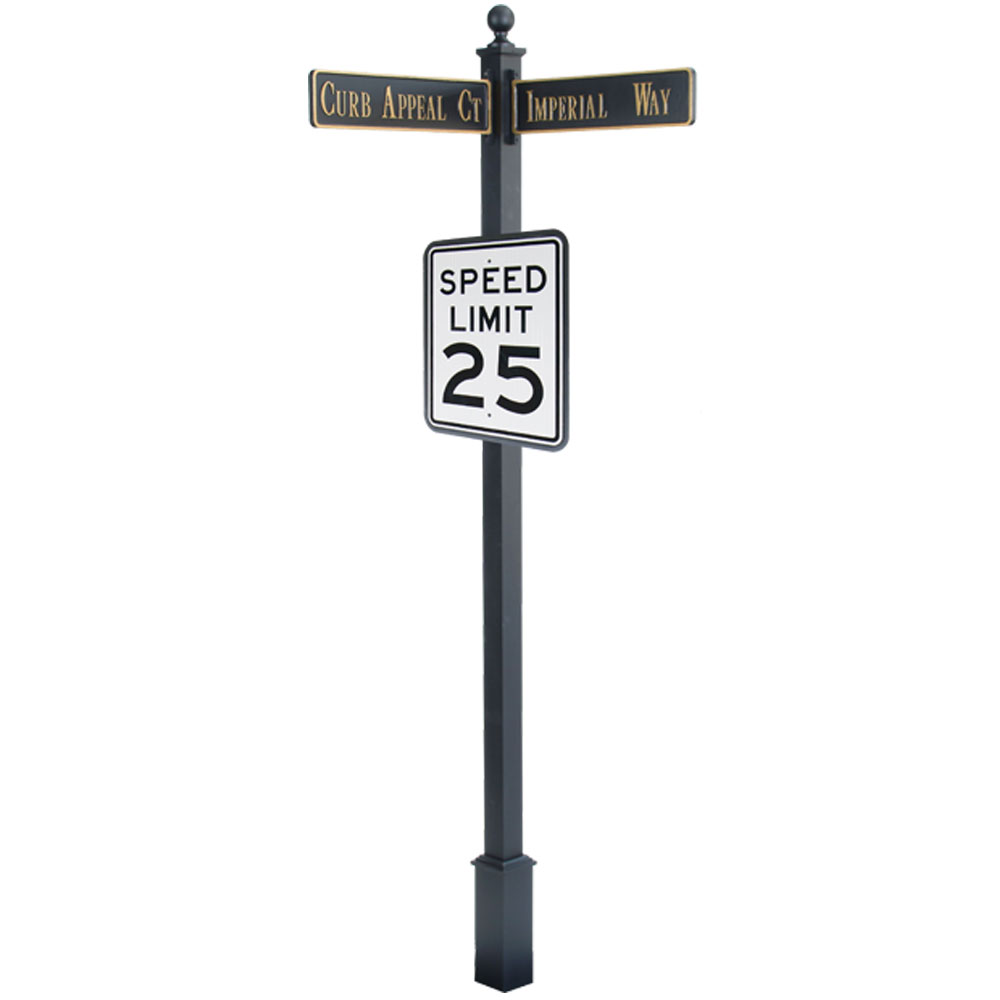
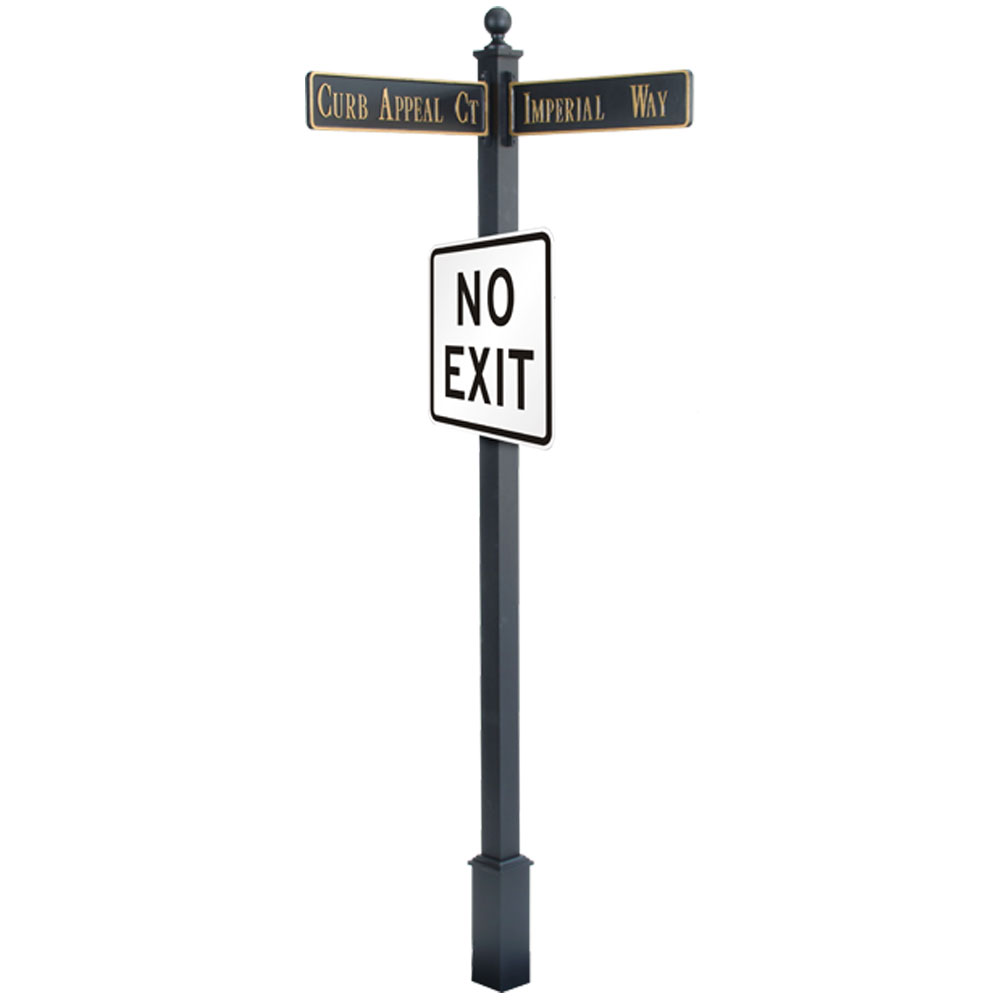
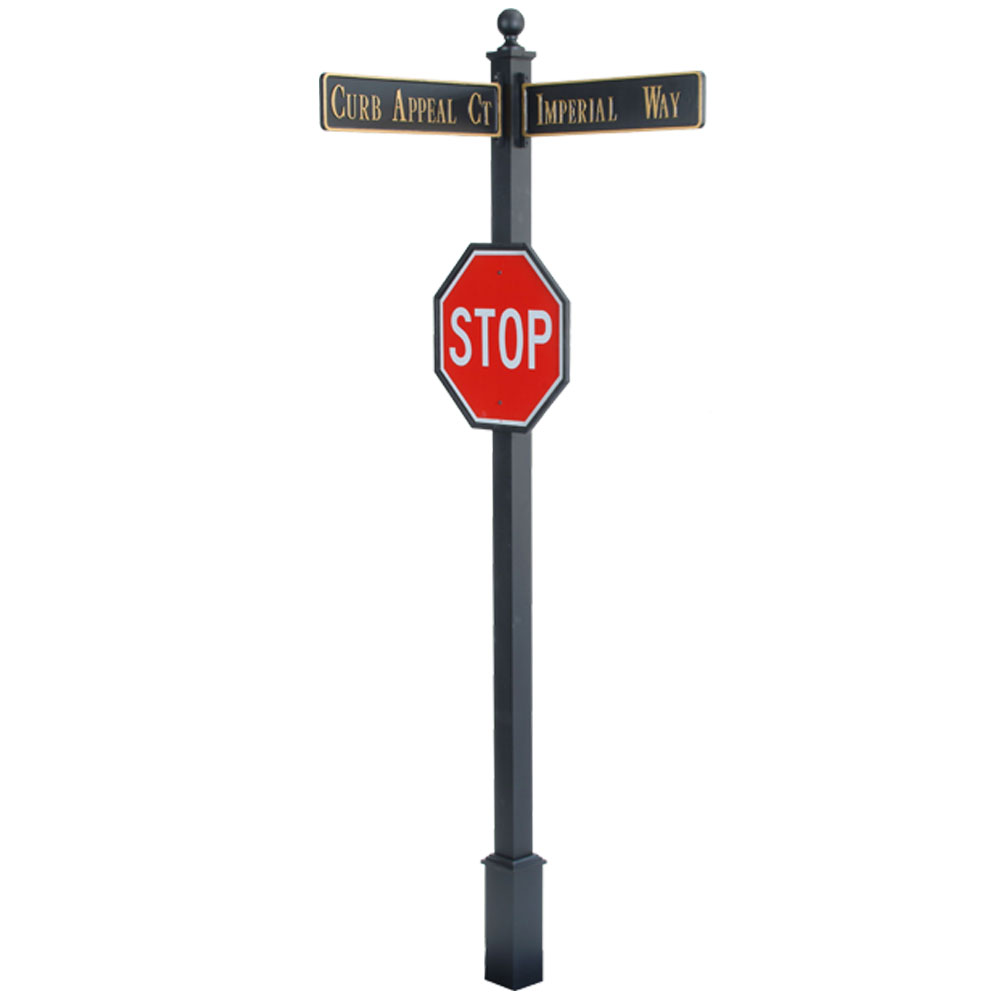
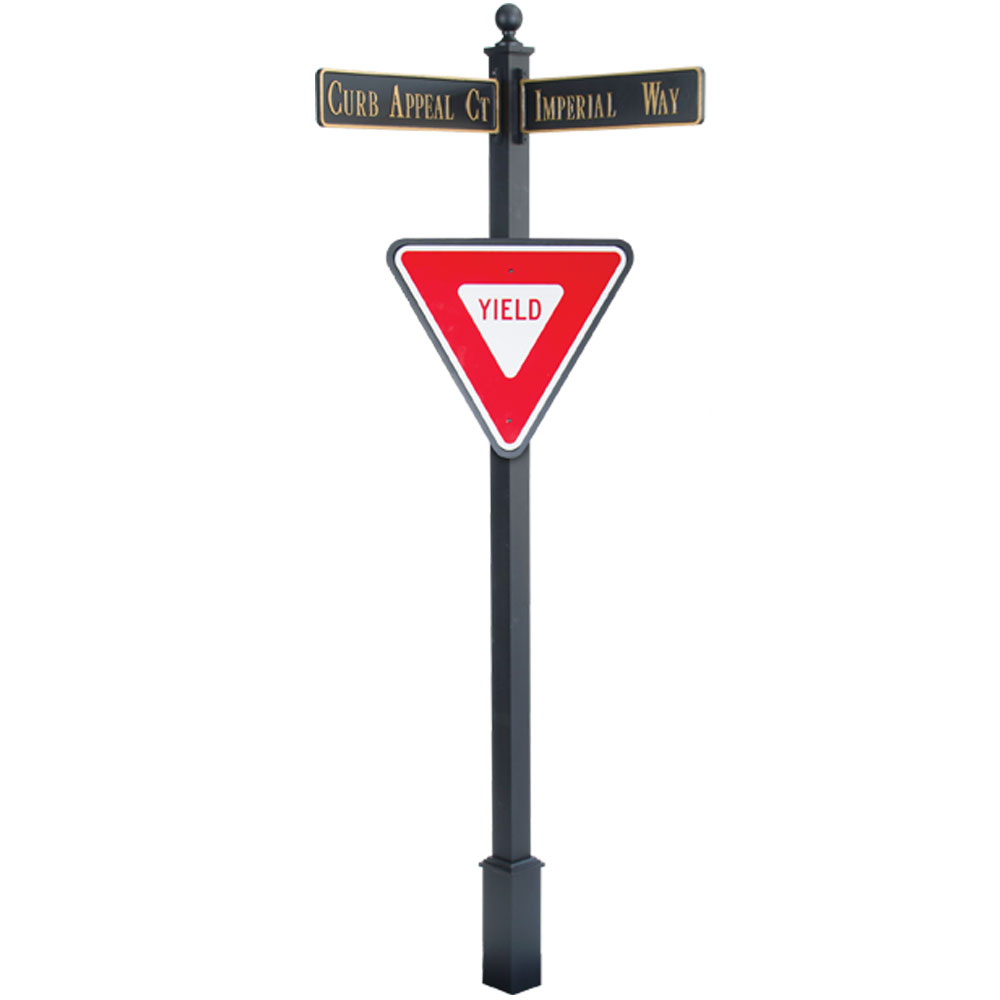
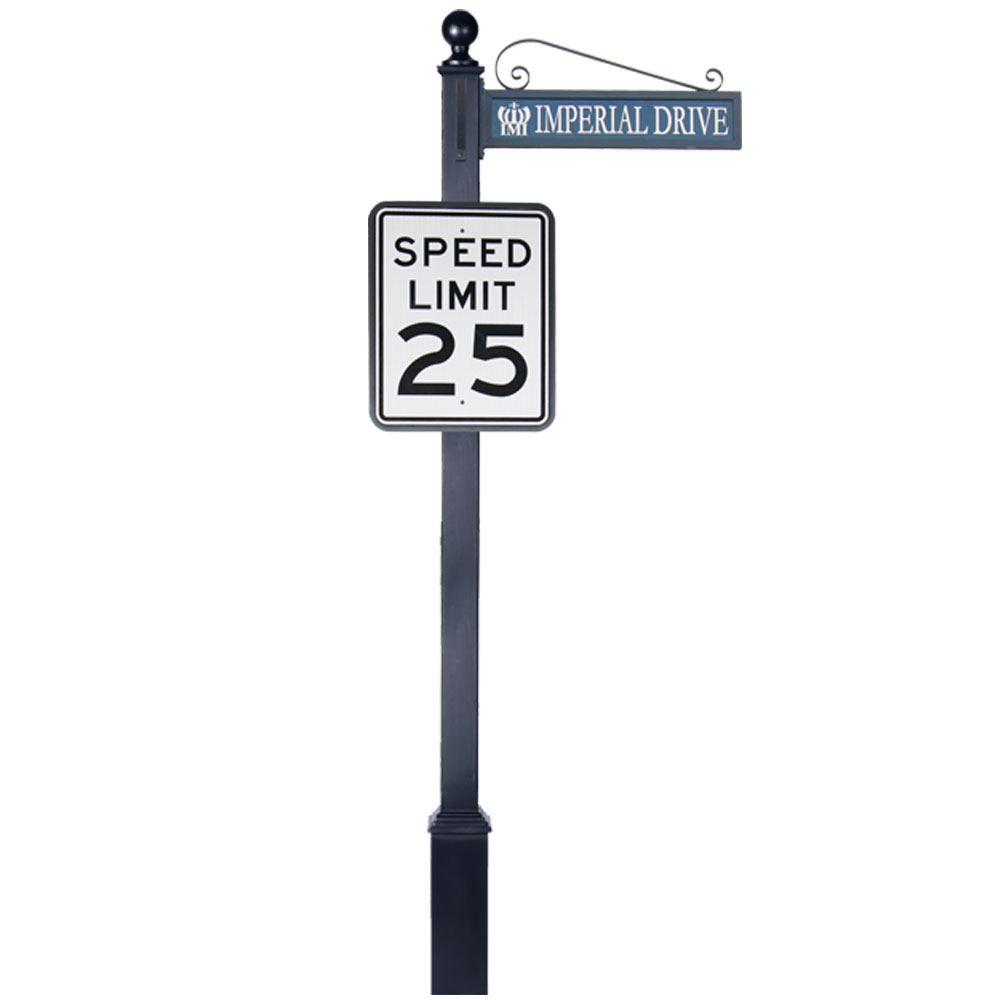
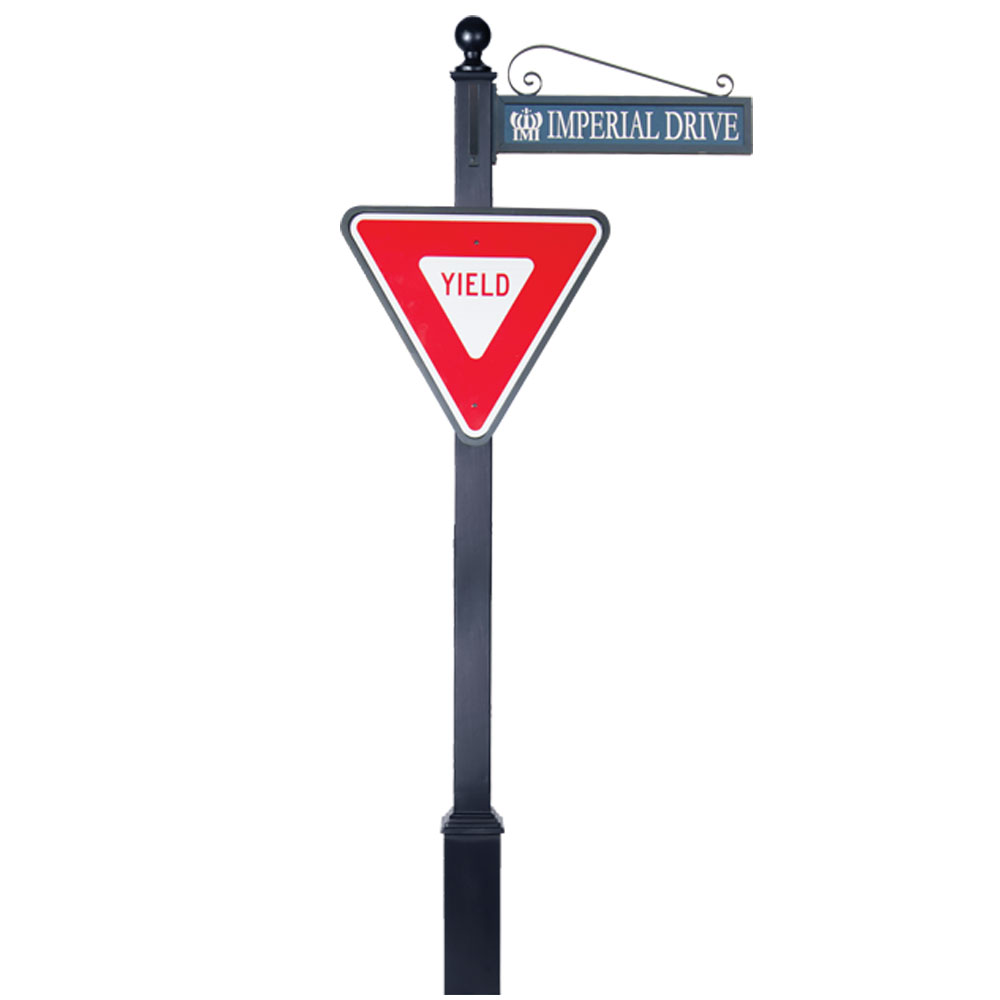
Traffic and Street Sign Package Estate Series - Stop Sign
All Sign Systems utilize an extruded
aluminum pole meeting ASTM
Standards. Century Poles are
Schedule 80, Imperial Poles are
Schedule 10, Estate Poles have a
wall thickness of .109"
All Systems Designed for Direct
Ground Burial
All Street Signs Are Finished
Using A Premium Enamel Paint
Ensuring Continuity Of Service.
D.O.T. Standard, Custom Sign
Faces & Street Name Signs
Available.
This product listing includes all of the following:
Post (14' 6")
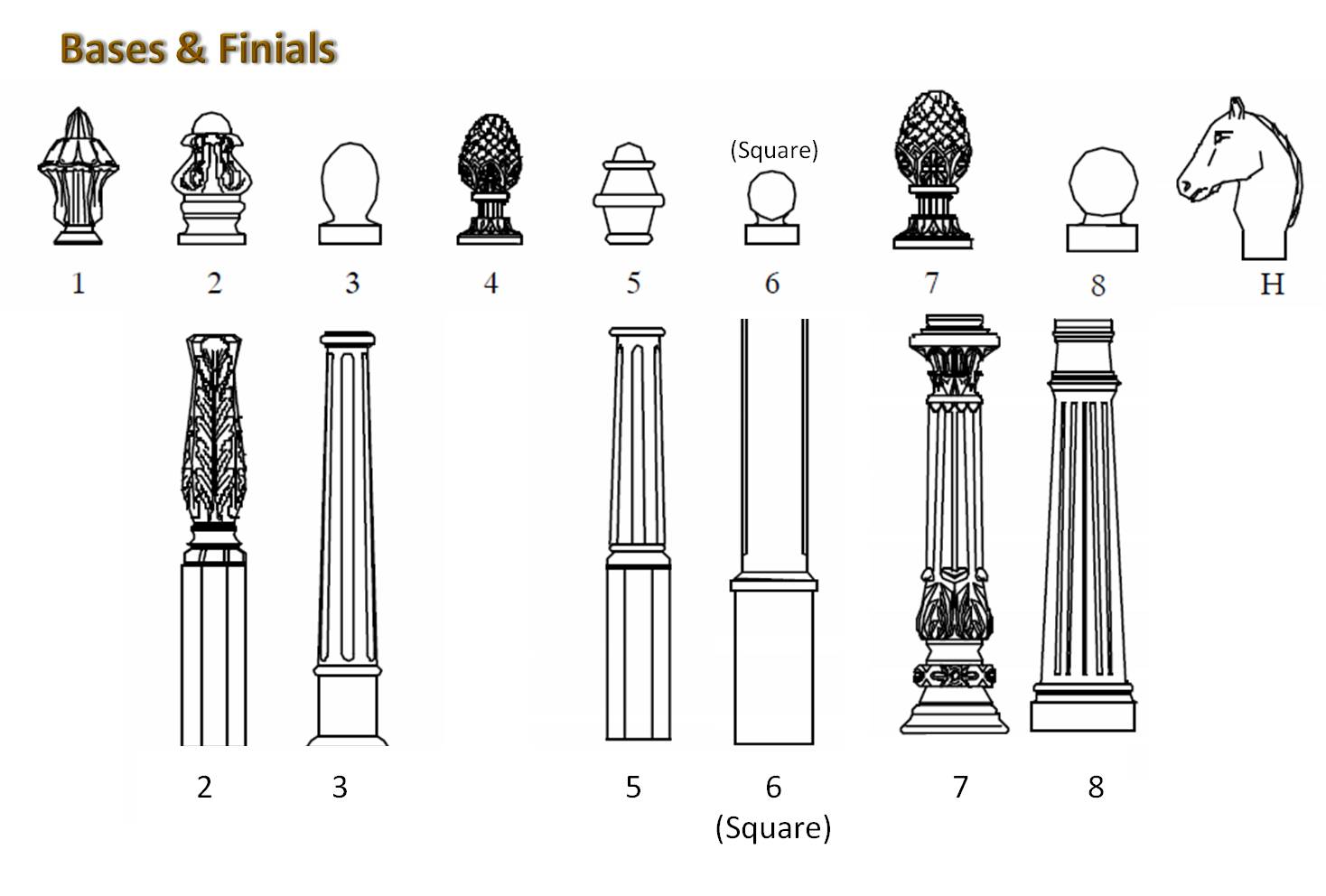
Base & Finial Type 8 Shown (You may substitute from
list below )
US DOT Approved Traffic Sign Backplate
US DOT Approved Traffic High Intensity Street Sign
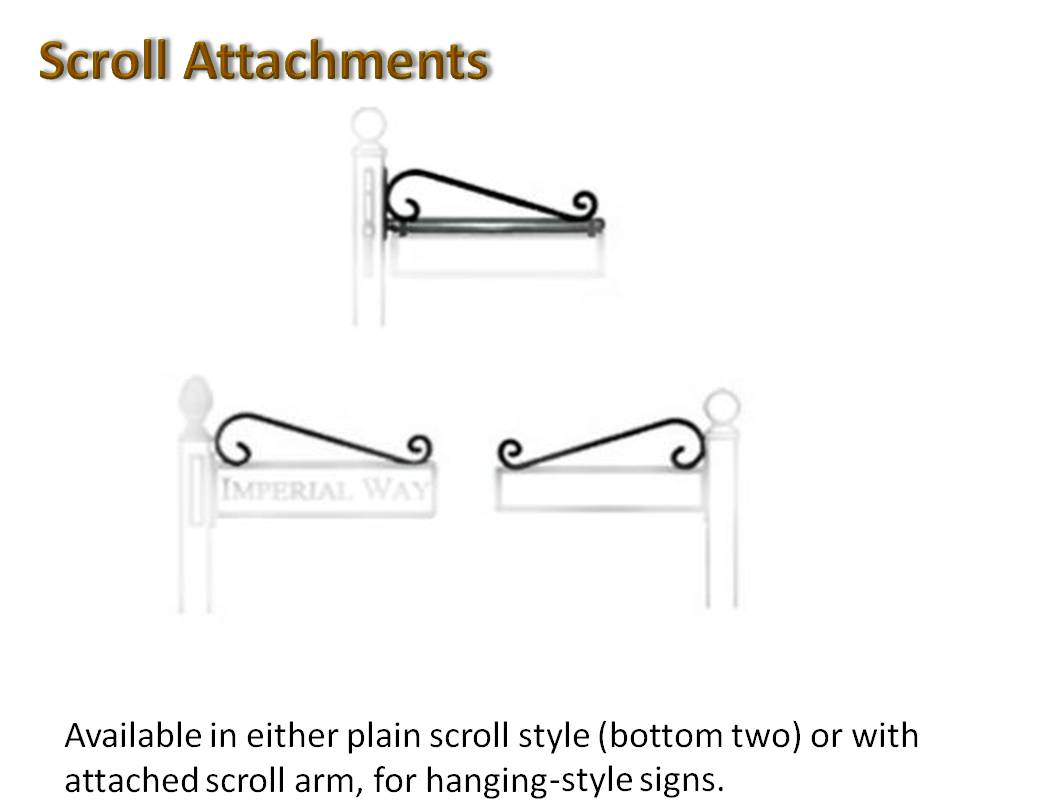
Street Sign Arms (select type in the option section)
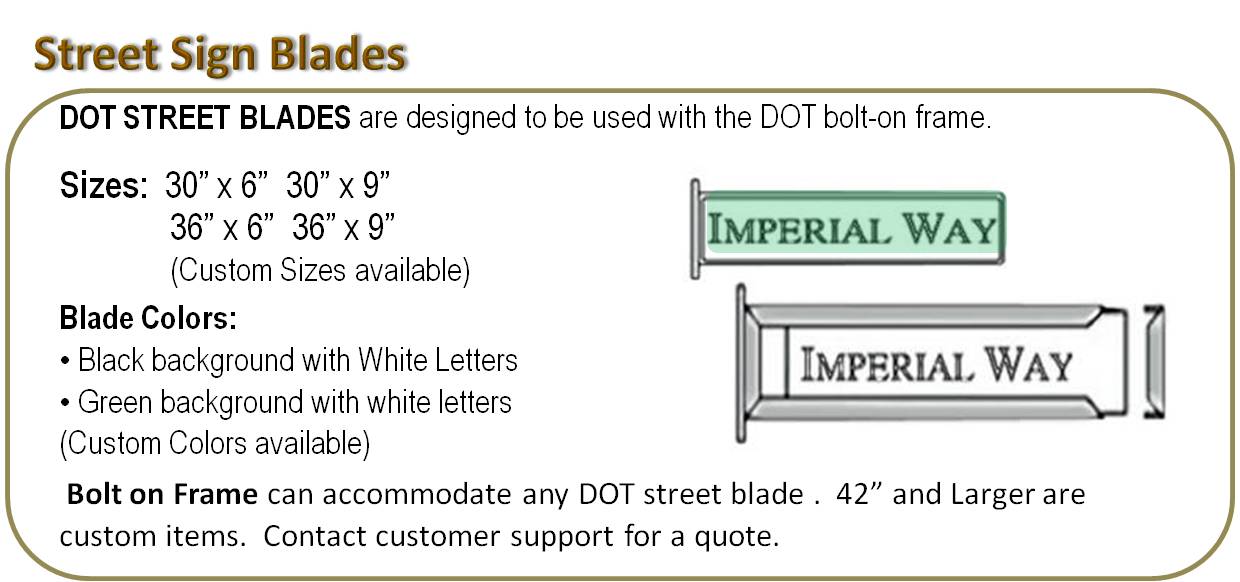
Street Sign Insert with Reflective Letters and bolt-on
frame
NOTE: Cast
Aluminum Blade Street Sign Systems, please see Items
IMP-E1-6b6 (with accompanying Traffic Signs) and IMP-E1-7b7 (with
accompanying Traffic Signs).
For Your Reference
OUR SKU is Imperial Street SignsIMP-E1-6SC6
This item is also sometimes listed under the following manufacturer numbers:
IMP-E1-6SC6
Weight
116 lbs
Brand
Imperial Street Signs
Shipping Info
Standard: usually ships in 2-3 business days. Custom: usually ships in 5-7 business days.
Learn more about our Estimated Lead Times
Material
Aluminum
Shipping Estimate
Standard: usually ships in 2-3 business days. Custom: usually ships in 5-7 business days.
Learn more about our Estimated Lead Times
Stock Status
In Stock
Ships To
Ships to the 48 contiguous United States. For AK or HI delivery, please contact us for a shipping quote.
Ship Method
Ships via USPS, UPS, or FedEx Standard Ground.
Shipping Policy
Thank you for your order! We will ship your order using the fastest, safest, and most reliable method possible. Small and medium-sized parcels will usually ship FedEx or UPS Ground, while large commercial items will ship via common freight carriers such as YRC, XPO Logistics, etc.
Every product on our site has been carefully selected to ship by a particular shipping method in order to provide you with an optimal delivery experience.
When your order ships, we will notify you via email. Included in your email will be a tracking number for your shipment. We encourage you to track your package online or on the phone with the carrier. Most companies can provide an estimated delivery date.
We offer a 90-day return period from the date of shipment. We will refund your order total, less our cost of shipping the item to you. In most cases, you will be responsible for the cost of shipping the item back to us. Custom orders are non-returnable.
Important: Orders returned without authorization will NOT be processed for credit or refunds. YOU MUST obtain a Return Goods Authorization Number (RGA#) from us so that the credit for the merchandise and any refund can be properly processed.