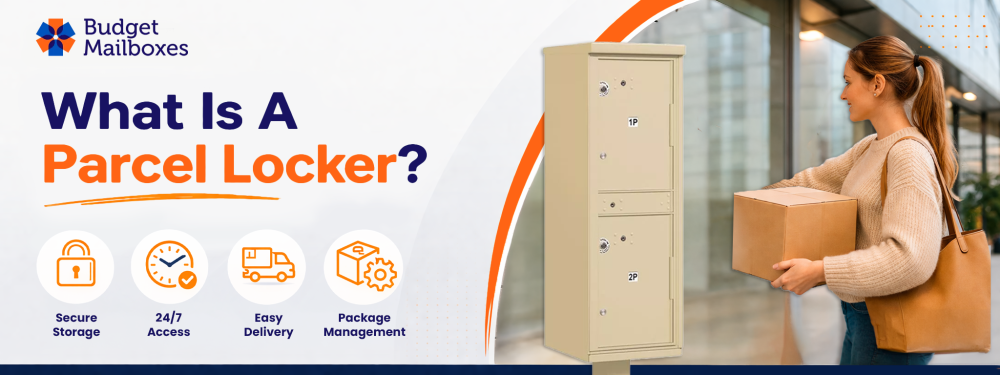
A parcel locker is a secure, lockable compartment used to store packages for recipient pickup. Carriers place packages inside, and recipients retrieve them using a key or access code. Parcel lockers protect deliveries from theft, weather, and missed-delivery attempts, making them a practical solution for residential communities, apartment buildings, and commercial properties that receive consistent package volume.
Package theft is a growing problem. E-commerce has pushed delivery volume to record levels, and the global parcel locker market is projected to reach $4.67 billion by 2034 as demand for secure, self-service delivery infrastructure accelerates. USPS now mandates parcel lockers as part of centralized mail delivery systems for new multi-unit residential construction. Homeowners, HOA boards, property managers, and real estate developers are all navigating the same question: which package locker setup is right for their property and how does it actually work.
Residents who received a USPS tracking update that says "Delivered, Parcel Locker" and aren't sure what to do next will find a step-by-step answer below. Property managers evaluating parcel locker options for a new development or replacement project will find a complete breakdown of types, USPS requirements, and sizing guidance. This page covers the definition, how the delivery and retrieval process works, the different types available, the benefits communities see after installation, and how to choose the right configuration for your property.
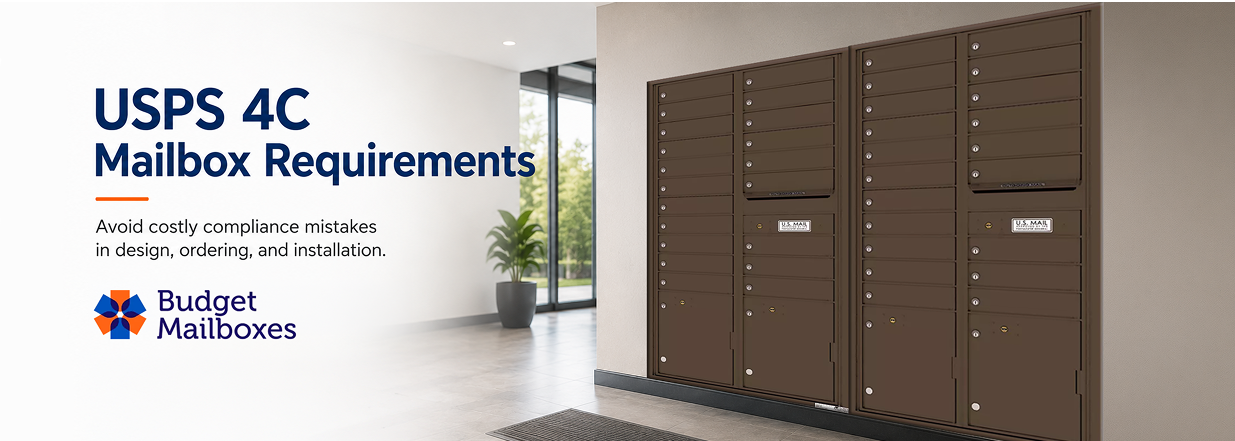
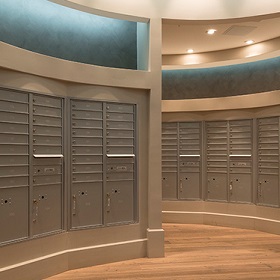
If you manage a residential community or multi-unit property, Budget Mailboxes carries a full selection of cluster mailboxes with integrated parcel lockers built to USPS standards.
Parcel Locker vs. Cluster Mailbox: What's the Difference?
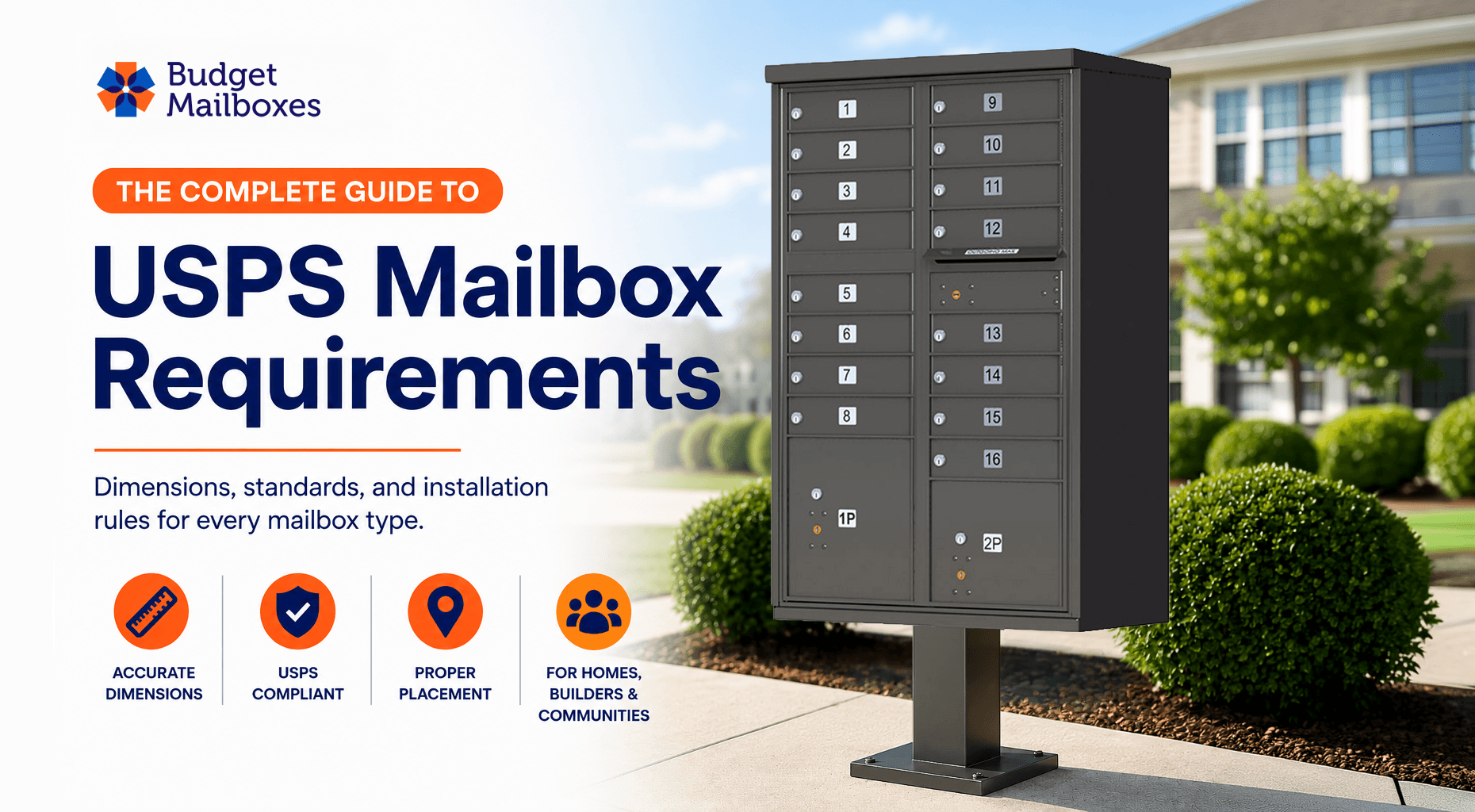
Buyers and property managers frequently use these terms interchangeably, but they describe different things. A cluster mailbox, also called a cluster box unit or CBU, is a centralized, multi-tenant mailbox system that houses individual mail compartments for each resident or unit. A parcel locker is the larger compartment built into or alongside that system, specifically sized to accept packages that don't fit in a standard mail slot.
Think of it this way: the cluster mailbox is the full unit. The parcel locker is one of its larger compartments.
Standalone electronic parcel lockers, however, operate independently from cluster mailboxes. These smart units use digital access codes instead of physical keys and are common in apartment lobbies, retail environments, and corporate campuses.
The table below maps the key differences at a glance.
|
Feature |
Cluster Mailbox Compartment |
Parcel Locker |
|
Primary use |
Letters, magazines, small mail |
Packages, parcels, oversized envelopes |
|
Access method |
Tenant key |
Numbered key (USPS) or access code (smart) |
|
Size |
Small: standard mail slot |
Large: fits boxes and padded mailers |
|
Who manages it |
USPS / property manager |
USPS / property manager / third-party operator |
|
USPS approval |
Required for centralized delivery |
Required when integrated into CBU systems |
For multi-unit properties, Budget Mailboxes stocks both cluster mailboxes and commercial mailboxes built to current USPS specifications.
How Does a Parcel Locker Work?
The delivery and retrieval process differs depending on whether the unit is a USPS traditional locker or an electronic smart locker.
USPS Traditional Parcel Lockers (Cluster Mailbox)
USPS traditional parcel lockers use a key-trapping cam lock system. The process from delivery to retrieval works as follows:
-
The carrier arrives at the cluster mailbox unit with a package too large for the tenant's standard compartment.
-
The carrier opens an available parcel locker using the USPS arrow lock, a master key that accesses all locker compartments.
-
The carrier places the package inside and closes the locker door. The door latches and cannot be reopened from the outside without the numbered tenant key.
-
The carrier places a small numbered key inside the tenant's standard mail compartment. This key corresponds to the specific locker holding the package.
-
The tenant opens their mailbox, retrieves the numbered key, and uses it to open the matching parcel locker.
-
The tenant removes the package. When the tenant closes the locker door, the cam lock mechanism traps the key inside. It cannot be removed. The key remains inside the locker for the carrier to retrieve and reuse on the next delivery cycle.
This key-trapping design is what makes USPS parcel lockers secure. The tenant cannot keep the key, and the locker cannot be reopened by another tenant. For more on how these systems operate within a cluster mailbox setup, see how cluster mailboxes work. Budget Mailboxes carries the 4-door parcel locker cluster mailbox for communities that need a USPS-approved integrated unit.
Electronic / Smart Parcel Lockers
Electronic parcel lockers replace the physical key with a digital access code. The process works like this:
-
The carrier scans the package at the locker terminal. The system assigns an available locker compartment and locks it automatically.
-
The system sends the recipient a unique access code via SMS, email, or a mobile app notification.
-
The recipient visits the locker bank, enters their code on the touchscreen terminal, or scans a QR code.
-
The assigned locker compartment opens. The recipient retrieves the package and closes the door.
Smart parcel lockers accept deliveries from multiple carriers: USPS, FedEx, UPS, and Amazon. These units don't require a physical key exchange, which makes them the preferred choice for higher-density properties where contactless, multi-carrier delivery is a priority. Property managers can monitor occupancy and access logs through a connected dashboard. Some models include temperature-controlled compartments for pharmacy or grocery deliveries.
Note: all parcel lockers sold by Budget Mailboxes are traditional USPS-approved units, where the postal carrier leaves a parcel locker key in the tenant's mailbox compartment. See the video below for more information:
Types of Parcel Lockers
Parcel lockers come in four main configurations. Each suits a different property type, delivery volume, and installation context.
USPS-Approved Parcel Lockers (Cluster Mailbox Integrated)
USPS-approved parcel lockers are built directly into cluster box units and manufactured to USPS STD-4C standards. Carriers access them using the USPS arrow lock. Tenants retrieve packages using the key-trapping numbered key system described above.
These units are constructed from aircraft-grade aluminum for long-term outdoor durability. Standard parcel locker compartments measure 19-3/4" H x 12" W x 15" D, accommodating padded mailers, small boxes, and most standard parcel deliveries. CBU configurations come in one, two, or four integrated parcel locker compartments depending on the unit size and the number of tenant mailbox slots.
USPS recommends one parcel locker for every five mailbox compartments. A 20-unit CBU installation, for example, should include at least four parcel locker compartments to handle typical daily package volume.
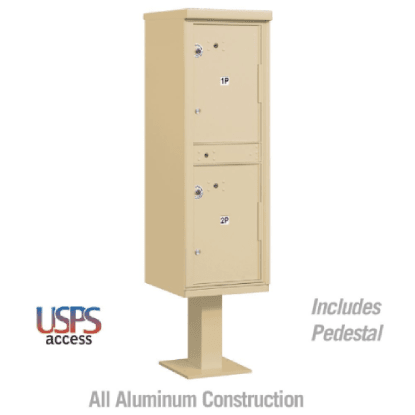
Budget Mailboxes carries the USPS-approved parcel locker with pedestal and the 4-door parcel locker cluster mailbox for communities that need integrated USPS-compliant delivery.
Outdoor Parcel Lockers (OPLs)
Outdoor parcel lockers are standalone units installed alongside an existing cluster mailbox system. Property managers choose them when the built-in CBU parcel locker compartments reach capacity, particularly in communities with high e-commerce delivery volume.
OPLs use the same cam lock key-trapping system as integrated CBU lockers. The carrier deposits a numbered key in the tenant's mailbox, and the same retrieval process applies. These units are weather-rated for year-round outdoor installation and mount to a pedestal or surface base.
Outdoor parcel lockers are a cost-effective way to expand parcel capacity without replacing an entire cluster mailbox system.
Smart / Electronic Parcel Lockers
Smart parcel lockers are common in apartment lobbies, university housing, retail locations, and corporate buildings. Property managers choose them when they need multi-carrier compatibility, contactless delivery, and centralized package management in one system.
These units use touchscreen terminals or mobile apps for recipient access. The system tracks every delivery and retrieval with a digital log, which reduces disputes and eliminates the physical key exchange process entirely. Some configurations include oversized compartments for freight deliveries and temperature-controlled compartments for cold-chain or pharmacy logistics.
Retailers use smart lockers for BOPIS (buy online, pick up in store) and BOPIL (buy online, pick up in locker) fulfillment. This model reduces staff handling time and extends pickup windows beyond store hours.
Residential Package Drop Boxes
Residential package drop boxes serve single-family homes. Homeowners install them at the curb or near the front entry to accept deliveries from USPS, FedEx, UPS, and Amazon without requiring a recipient to be present.
These units use a one-way drop door: carriers lift the door to deposit a package, and the door latches shut automatically. The homeowner opens the unit from the back using a standard key lock. Drop boxes don't use the USPS key-trapping system because they're designed for private, non-centralized delivery.
Budget Mailboxes carries a full range of parcel mailboxes for package delivery and package and parcel drop boxes for single-family and small-property applications.
Benefits of Parcel Lockers
Property managers, HOA boards, and residents choose parcel lockers for several practical reasons. The core value is security, but the operational benefits extend well beyond theft prevention.
Parcel lockers deliver the following for communities and properties:
-
Theft prevention: Packages stored inside a locked compartment aren't accessible to anyone without the numbered key or access code. Porch piracy and mail theft drop significantly in communities with installed parcel lockers. See Budget Mailboxes' guide on how to prevent mail and package theft for additional strategies.
-
24/7 access: Residents retrieve packages on their own schedule, including early mornings, late evenings, and weekends, without coordinating with a leasing office or building manager.
-
Fewer failed deliveries: Carriers complete the delivery on the first attempt instead of leaving a notice and attempting redelivery. This reduces carrier workload and cuts the fuel and labor cost of return trips. Residents eliminate the inconvenience of missed delivery windows entirely.
-
Reduced property manager workload: Buildings without parcel lockers route packages through a leasing office or concierge. A parcel locker system removes that handling requirement entirely.
-
Resident satisfaction: Package security ranks consistently as a top priority for apartment renters and HOA community members. Communities with installed parcel lockers report higher resident satisfaction scores and lower package-related complaints.
-
Environmental efficiency: Consolidated parcel locker delivery reduces the number of redelivery attempts per address. Fewer truck trips per delivery route lowers fuel consumption and emissions at the route level.
For communities evaluating locking mailboxes alongside parcel lockers, Budget Mailboxes carries both product categories with USPS-compliant options across all property types.
Parcel Locker vs. PO Box: What's the Difference?
Parcel lockers and PO Boxes both provide secure package storage, but they serve different purposes and operate through entirely different systems. Residents in cluster mailbox communities don't choose between them. They use whichever applies to their delivery address. The comparison matters most for buyers who are deciding how to receive sensitive mail or high-value packages.
|
Feature |
Parcel Locker |
PO Box |
|
Location |
On-property: cluster mailbox installation or building lobby |
USPS post office facility |
|
Access |
Numbered key (USPS) or digital code (smart) |
Individual tenant key |
|
Cost |
Included in property; no individual rental fee |
Monthly or annual rental fee |
|
Size |
Large: designed for parcels and packages |
Smaller: designed for letters and small mail |
|
Carrier compatibility |
USPS (traditional); all carriers (smart) |
USPS only for standard PO Box delivery |
|
Management |
USPS / property manager / third-party operator |
USPS |
|
Availability |
Available at your delivery address |
Requires trip to a post office location |
The key practical difference: a parcel locker comes to the recipient's property. A PO Box requires the recipient to travel to the post office. For residents in communities with installed CBUs, the parcel locker is a shared, as-needed resource, the standard delivery method for any package too large for their individual mail compartment.
What Does "Delivered, Parcel Locker" Mean?
When USPS tracking updates to "Delivered, Parcel Locker," it means the carrier placed your package inside a parcel locker compartment at your cluster mailbox unit, not at your door. This status confirms successful delivery. The package is secure and waiting for you.
Follow these steps to retrieve it:
Check your standard mailbox first. The carrier placed a small numbered key inside your regular mail compartment. This key matches the number on one of the parcel locker doors on your cluster mailbox unit.
Find the matching locker. Each parcel locker door displays a number. Match the number on your key to the number on the locker door.
Open the locker and retrieve your package. Insert the key, open the door, and remove your package. When you close the door, the cam lock mechanism traps the key inside automatically. You won't be able to remove the key. That's intentional. The carrier retrieves it on the next delivery cycle.
If you can't find the key in your mailbox, check that the carrier has completed the delivery route for your address. Tracking sometimes updates before the physical key is deposited. If the key is still missing after your next scheduled delivery day, contact your local post office with your tracking number. The carrier can confirm which locker compartment holds your package and assist with access.
If the locker won't open, the key may be mismatched or the locker door may not be fully closed from a prior delivery. Contact your property manager or local postmaster for assistance.
If all parcel lockers are full, carriers are instructed not to leave packages without an available locker compartment. USPS will attempt redelivery or return the package to the post office for pickup. Residents can collect it directly from their local post office using the tracking number and a valid ID. If your property is regularly hitting locker capacity, that's a clear signal the installation needs more compartments, either an additional outdoor parcel locker or a full CBU upgrade.
How to Retrieve a Package from a Parcel Locker
USPS traditional parcel locker:
The retrieval process takes less than a minute once you have the key from your mailbox.
-
Open your assigned mailbox compartment and look for a small numbered key.
-
Locate the parcel locker on your cluster mailbox unit with the matching number on the door.
-
Insert the key and open the locker door.
-
Retrieve your package.
-
Close the locker door firmly. The cam lock traps the key inside. This is correct. Do not attempt to remove the key.
Electronic / smart parcel locker:
Check your notification first. The access code and locker number are in the message sent at the time of delivery.
-
Check your phone for a delivery notification from the locker operator (SMS, email, or app).
-
Go to the locker bank and locate the terminal.
-
Enter your unique access code on the touchscreen or scan the QR code from your notification.
-
The assigned locker compartment opens automatically. Retrieve your package.
How to Choose the Right Parcel Locker for Your Property
Property managers and HOA boards should evaluate parcel locker options against four practical criteria before purchasing.
Number of units and residents. USPS recommends one parcel locker compartment for every five mailbox slots. A 40-unit building should plan for a minimum of eight parcel locker compartments. Undersizing the locker count creates competition for available compartments and forces carriers to leave delivery notices instead of completing deliveries.
Expected package volume. E-commerce delivery frequency varies significantly by resident demographic. Communities with higher concentrations of online shoppers need more locker capacity. Estimate daily package volume by surveying residents or reviewing carrier delivery logs from your current setup.
USPS approval requirements. New multi-unit residential construction requires USPS STD-4C compliant centralized delivery equipment. Replacement projects in existing buildings may qualify for 4B+ units where full 4C upgrades aren't feasible. Confirm your specific requirement with your local postmaster before purchasing. Budget Mailboxes' guide on USPS cluster mailbox regulations covers the current compliance framework in detail.
Indoor vs. outdoor placement. Outdoor installations require weather-rated units constructed from aircraft-grade aluminum or galvanized steel with powder-coated finishes. Indoor lobby installations have more flexibility in material and finish but must still meet USPS access and dimensional requirements.
Multi-carrier vs. USPS-only. USPS arrow lock parcel lockers are serviced exclusively by USPS carriers. FedEx, UPS, and Amazon cannot access them. Communities where residents receive regular deliveries from multiple carriers need a smart locker system, not a traditional CBU parcel locker. If USPS handles the majority of your community's deliveries, a USPS-approved CBU remains the right baseline.
Final Words
Parcel lockers have become standard infrastructure for residential communities and commercial properties. They keep packages secure, simplify delivery logistics for carriers, and reduce the workload on property managers and building staff.
Budget Mailboxes specializes in USPS-approved parcel locker solutions for residential communities, HOAs, apartment buildings, and commercial properties. Our product specialists help property managers match locker configurations to unit counts, confirm USPS compliance requirements, and navigate bulk orders for new construction or full-community replacements. Every product listing includes dimensional specs, compliance notes, and installation details.
Browse our full selection of cluster mailboxes and parcel mailboxes for package delivery for communities managing a large installation in configurations from small residential to large commercial, along with bulk order quote support for your community. Call our team at 1-866-707-0008 for personalized guidance.
Frequently Asked Questions
A parcel locker is a secure, lockable compartment used to store packages for recipient pickup. Carriers deposit packages and leave a retrieval key or send an access code to the recipient. Parcel lockers are built into cluster mailbox systems or installed as standalone smart locker units in apartment buildings and commercial properties.
Standard USPS parcel lockers integrated into cluster mailbox units measure 19-3/4" H x 12" W x 15" D. This size accommodates padded mailers, small to medium boxes, and most standard parcel deliveries. Smart locker installations include multiple compartment sizes: small, medium, large, and oversized, to accommodate a wider range of package dimensions.
No. A parcel locker is located at your delivery address, either on your property or in your building. A PO Box is a rented compartment inside a USPS post office facility that requires you to travel to a post office location for pickup. Parcel lockers are included as part of your property's mail delivery infrastructure. PO Boxes require a separate monthly or annual rental fee.
USPS does not publish a universal hold period for parcel locker packages, but carriers expect retrieval within the same delivery cycle, usually within one to two business days. If a package remains in the locker through multiple delivery cycles, the carrier may attempt to contact the recipient or the property manager. Smart locker operators commonly set a 3-5 day pickup window before the package is returned or flagged.
For USPS-integrated CBU parcel lockers, the property owner or HOA is responsible for the physical unit. USPS manages delivery access via the arrow lock system. For smart locker installations, the locker operator or property manager handles maintenance under a service agreement with the locker manufacturer or software provider.